Design · Materials · 15 Aug 2026
Noble materials that age beautifully

by Zoraida Zapata
Interior architect
6 min read
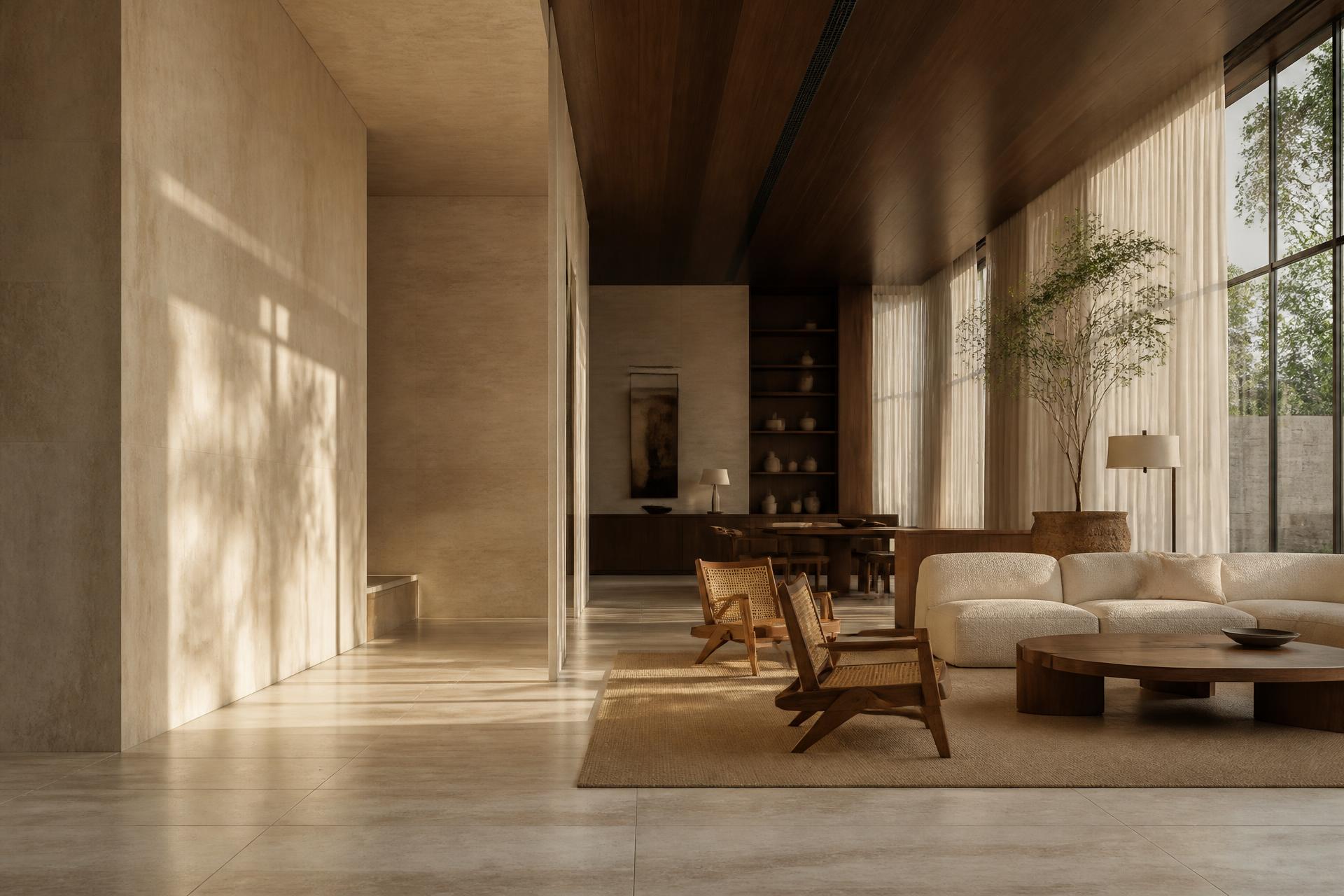
Real beauty doesn't need to stay perfect: it needs to feel true. Choosing noble materials means deciding that your space will evolve with you, and that the passage of time, rather than wearing it down, will enrich it.
Natural stone, solid wood, honest fibres and textures. Elements that come from the earth and that, over the years, tell a story: yours.
What we mean by noble materials
A noble material is one that is what it claims to be, all the way through. It doesn't imitate another surface or depend on a printed layer to look good: its colour, its grain and its feel are part of its own mass. That's why, when it's scratched, polished or worn, it remains the same material.
That quality has an enormous practical consequence: a noble material can be repaired, refinished and maintained for decades, while a surface finish can only be replaced once it fails.
Initial perfection isn't the same as lasting beauty
Some surfaces arrive on site at their very best moment, and from then on can only get worse: any mark gives them away. Noble materials work the opposite way. Their first version is only the starting point; with use they gain nuance, sheen and character.
Designing with this criterion means accepting that a lived-in house carries traces, and deciding that those traces add rather than detract.
A noble material doesn't impose itself. It accompanies, transforms, and becomes part of your story without losing its essence.
Natural stone
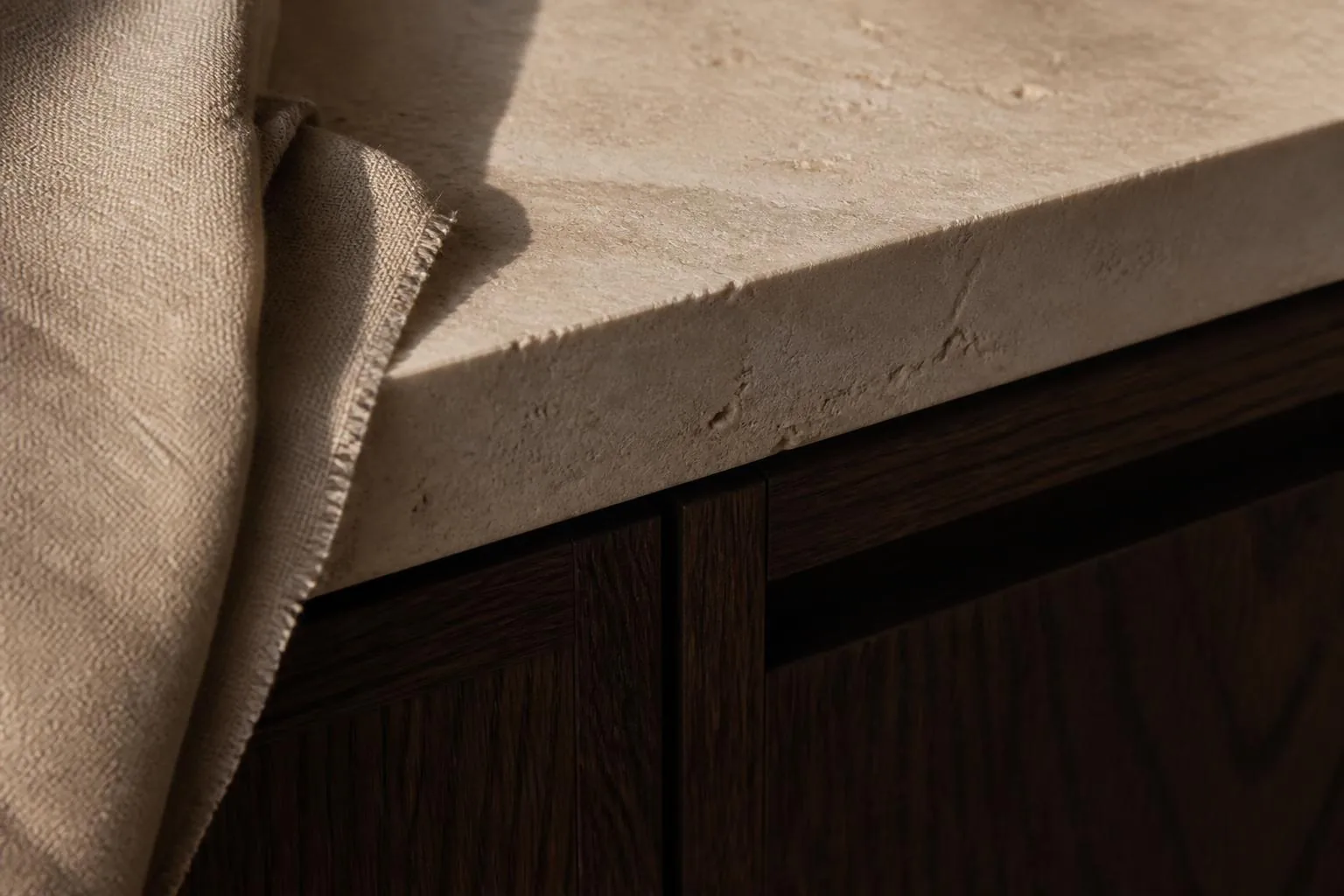
Every vein, every tone and every imperfection is unique. Stone brings freshness, visual weight and a direct connection to the landscape. In the Mexican Caribbean it feels especially fitting: it responds well to heat, offers surfaces that stay cool to the touch, and converses with the intense light without hardening the mood of a room.
How to choose it and care for it
More porous stones need periodic sealing and are best avoided where oil or acids are unavoidable. Denser ones handle an intensively used kitchen better. A matte or brushed finish disguises daily wear far better than a mirror polish, and on flooring it reduces slipperiness.
Oak and other natural woods
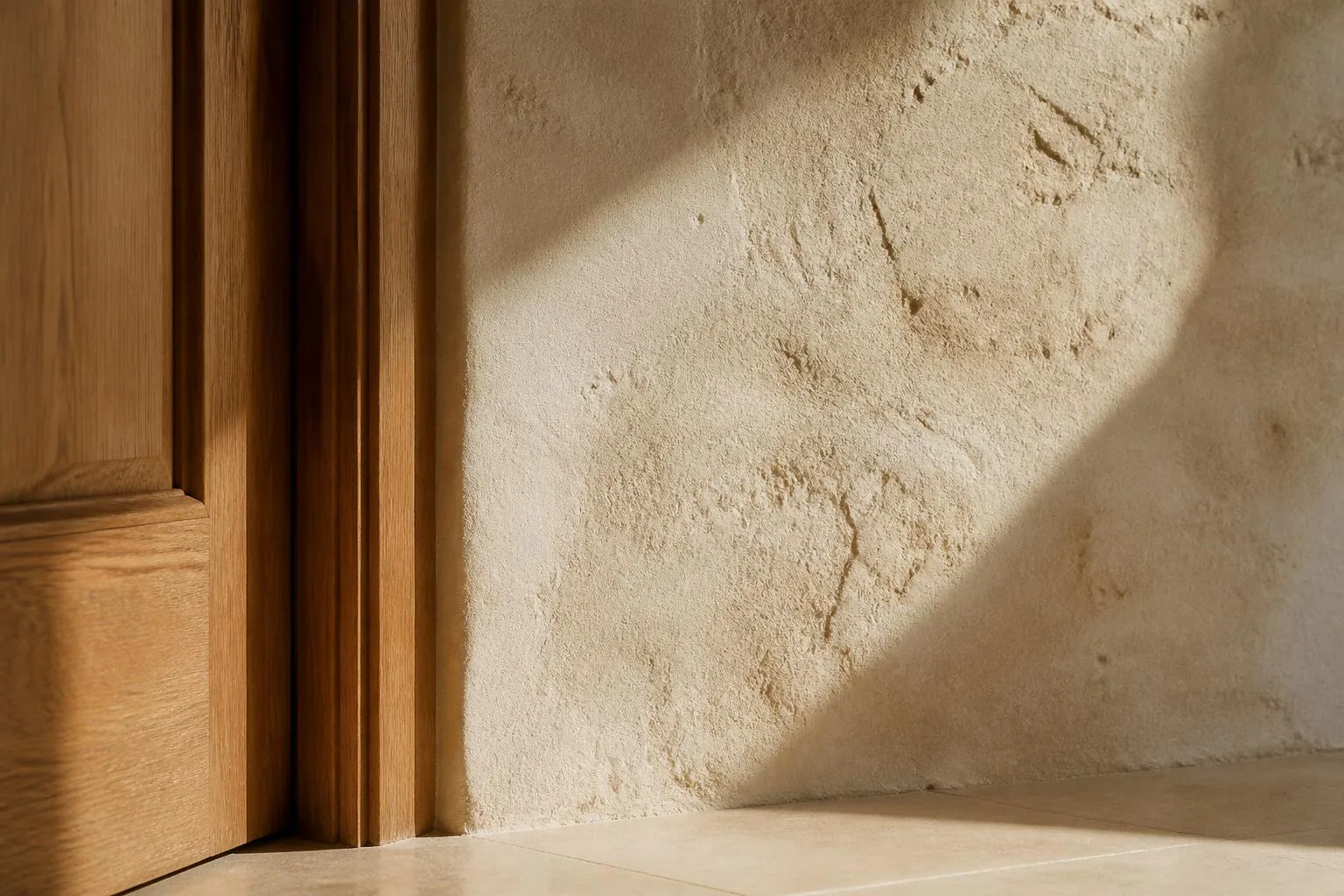
Wood is the material that most quickly humanises a space. Oak is a benchmark for its stability, its calm grain and its ability to suit both contemporary and classic settings. With use it acquires a deeper tone and a patina that can't be manufactured.
Decisions that make the difference
In a warm, humid climate, dimensional stability and a good installation matter just as much as the species chosen. Natural oils allow for local repairs and age naturally; varnishes offer a harder barrier, but when they fail they need to be stripped and redone entirely.
Texture, grain and patina: the beauty of the imperfect
Tactile richness is what separates a photogenic interior from one that's a pleasure to live in. A textured surface returns light unevenly, softens reflections, and makes a space feel calm. Patina is simply the record of that use: the edge of a table, the path in front of a door, the spot where the afternoon sun lands each day.
How to choose with climate and lifestyle in mind
Before looking at samples, it's worth looking at the life of the space. A beachfront apartment with constant salinity and humidity doesn't accept the same solutions as an inland residence. A home with children or pets needs forgiving surfaces; a second home that stays closed for weeks at a time calls for stable, low-maintenance materials.
The useful questions are concrete: how many hours of direct sun does it get? Is there contact with water or chlorine? Who will maintain it, and how often? Can this piece still be repaired in ten years?
Aesthetics, maintenance and durability: always together
A well-chosen material is the point of balance between what moves you, what can realistically be cared for, and what will withstand the intended use. When one of these three variables is ignored, the result shows soon enough: finishes that age badly, surfaces impossible to clean, or durable solutions that leave a space feeling cold.
How I approach material selection in a project
I select every material not only for how it looks, but for how it feels, how it ages and how it fits into the daily life of the people who live there. I work with tight palettes, test samples in the project's real light, and define maintenance criteria from the start, so the decisions hold up long after handover.
If you're thinking of transforming your house or your property, choosing the right materials is one of the first steps that will have the greatest impact on the outcome. It's a conversation worth having calmly, before you buy anything.